Qafila Ecommece Fulfilment Log
Talk to an agent

Monthly Market Update – Delivery Speed and Fulfilment Become Competitive Differentiators

E-commerce competition is increasingly moving beyond price, product assortment and digital experience. Delivery speed, fulfilment reliability and inventory proximity are becoming central parts of the customer proposition. 

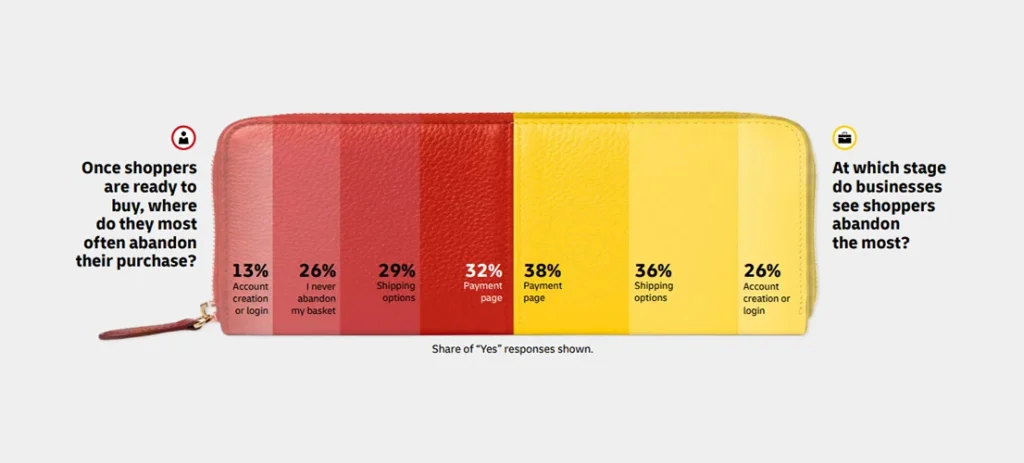
E-commerce cart abandonment statistics showing shoppers most often abandon purchases at the payment page (32%) and shipping options (29%).

Global consumer expectations continue to rise. DHL’s 2026 global e-commerce research, covering 29,000 shoppers and 5,800 businesses across 29 markets, found that 20% of shoppers say faster delivery would encourage them to complete a purchase, while seven in ten consider trust and choice of delivery partners important when choosing where to shop. 

The recent developments suggest retailers are responding by moving inventory closer to consumers, expanding same-day delivery partnerships, using rapid-delivery platforms for more product categories and building fulfilment networks around increasingly narrow delivery windows. 

Global Market: Fast Delivery Expands Beyond Convenience Goods

The strongest global signal is the expansion of on-demand delivery beyond restaurant meals and emergency grocery purchases. 

Wolt reported that retail products now represent more than one-quarter of its global sales, with more than two million people ordering retail products through the platform each month. The company has completed more than 230 million retail orders, while grocery basket values increased 46% during 2025. 

The significance is not simply that consumers want faster groceries. Rapid-delivery networks are increasingly being used for: 

  • electronics 
  • pharmacy products 
  • pet supplies 
  • flowers 
  • household products 
  • larger grocery baskets 
  • last-minute purchases 

This suggests on-demand fulfilment is evolving from a niche convenience service into another mainstream retail channel, a shift we tracked in detail in our look at the evolution of quick commerce and 30–60 minute delivery in the UAE and MENA.

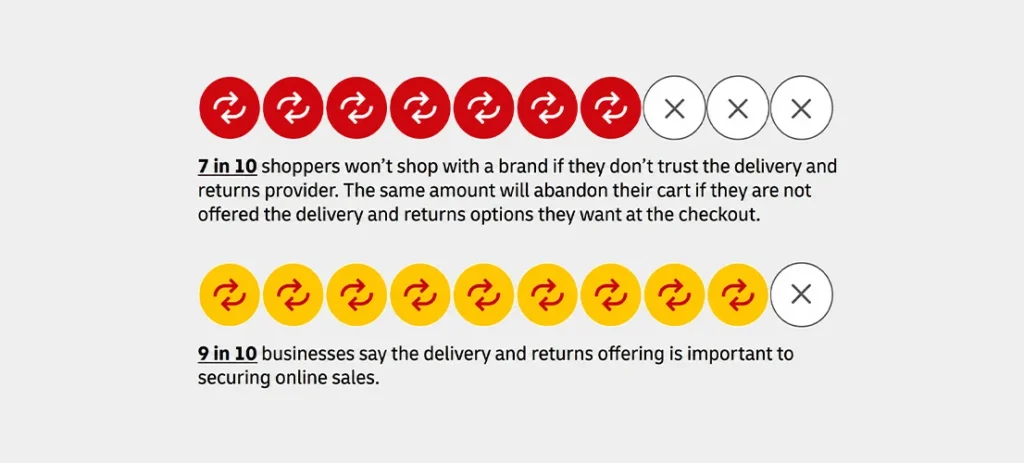
Seven in ten online shoppers value trusted delivery and returns providers, while nine in ten businesses consider delivery and returns important for online sales.

Major retailers are widening their same-day networks

Costco expanded its Uber Eats partnership in September to nearly 600 US warehouse locations across 47 states, adding another route for customers to access same-day delivery. Costco has also said that its same-day channels through Instacart, Uber Eats and DoorDash had been growing faster than its overall digital sales.

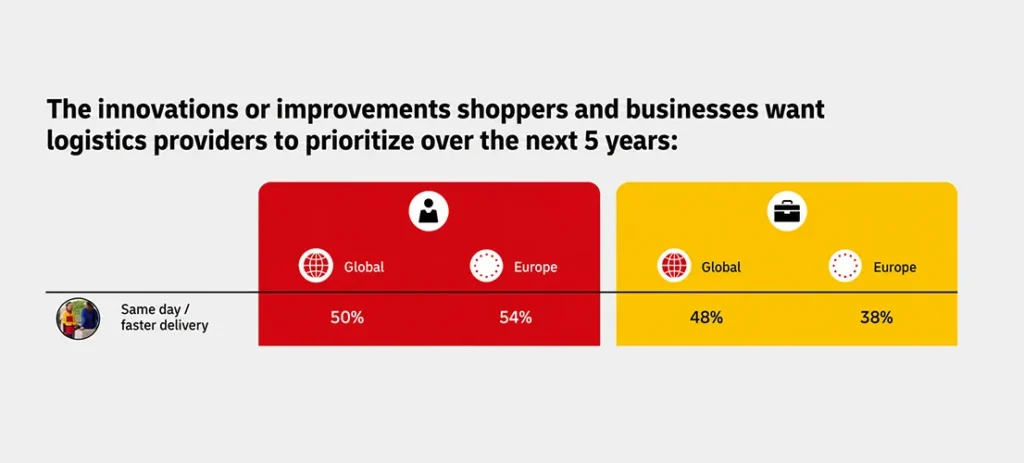
Global e-commerce survey showing 50% of shoppers and 48% of businesses prioritize same-day or faster delivery improvements over the next five years.

This highlights an important change in fulfilment strategy. Retailers do not necessarily need to build every last-mile capability themselves. Partnerships with delivery platforms can let them extend same-day coverage while using existing stores and warehouses as fulfilment points. It is one of the reasons more retailers are investing in same-day fulfilment.

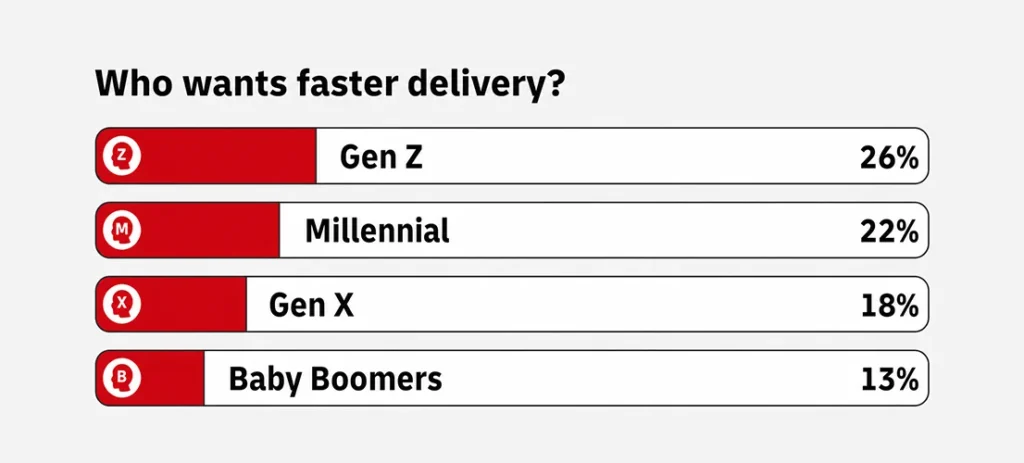
Faster e-commerce delivery demand by generation: Gen Z 26%, Millennials 22%, Gen X 18%, and Baby Boomers 13%.

Expectations are spreading into harder-to-fulfil categories

Fast delivery expectations are also reaching categories traditionally associated with longer lead times. 

A recent analysis from Retail TouchPoints argues that consumers increasingly expect even bulky products within one or two days. It cites examples of retailers using distributed inventory placement and more frequent forecasting to shorten delivery times. 

This is important because bulky e-commerce exposes the operational trade-off behind faster fulfilment: 

Speed requires inventory to be positioned closer to demand. 

That increases the importance of: 

  • regional warehousing 
  • accurate demand forecasting 
  • distributed inventory 
  • order-routing technology 
  • carrier integration 
  • stock visibility 

The competitive advantage is therefore shifting from simply offering “fast delivery” to having the fulfilment infrastructure capable of consistently supporting it.

UAE Market: Same-Day and Ultra-Fast Delivery Move Toward the Mainstream

The UAE provides an even stronger example of this shift because customers are already accustomed to highly convenient digital services and dense urban fulfilment networks. 

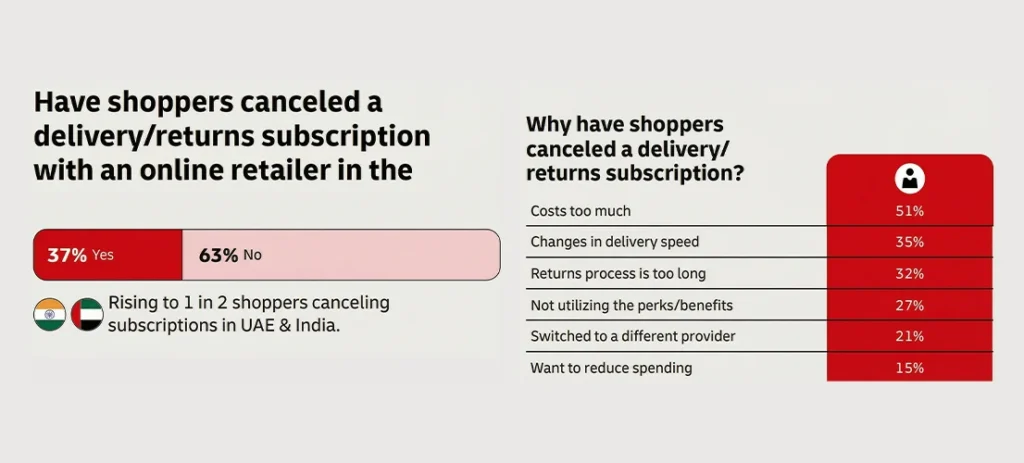
Online delivery subscription cancellation statistics showing high costs (51%), delivery speed changes (35%), and lengthy returns processes (32%) as leading reasons.

Same-day delivery expands across traditional retail

In September, Jashanmal launched same-day delivery across more than 15,000 products covering categories including appliances, fashion, beauty, home, travel and books. 

Orders placed before noon can qualify for delivery on the same day. 

This is significant because same-day fulfilment is no longer confined to groceries or food delivery. It is becoming part of the service proposition of established multi-category retailers.

Amazon is pushing fulfilment toward "minutes"

A particularly important September development came from Amazon and Ghitha Holding. 

The companies announced plans to connect UAE agricultural production more closely to Amazon’s supply chain, with locally produced fresh products intended for delivery through Amazon Now in minutes. 

The collaboration also includes plans for a packhouse and distribution centre at Dubai’s Food Tech Valley. 

This demonstrates how ultra-fast delivery changes the supply chain itself. 

Instead of: 

Producer → central warehouse → retailer → customer 

the emerging model increasingly attempts to shorten the distance between: 

Production → local fulfilment → customer 

Speed therefore becomes partly an inventory and infrastructure challenge rather than simply a courier challenge.

UAE Fulfilment: Inventory Is Moving Closer to Regional Demand

Another important September signal came from Dior. 

The company opened a 7,200-square-metre regional distribution centre at Dubai South to support Middle East operations, including inventory management, order fulfilment, boutique replenishment and UAE e-commerce. 

Dubai South says positioning inventory closer to Middle Eastern markets will improve product availability and accelerate replenishment. 

This development provides an important counterpoint to ultra-fast last-mile delivery. 

The ability to deliver quickly begins much earlier than the delivery vehicle. 

It depends on: 

Inventory positioning → warehousing → order processing → transport → last mile 

For international brands, regional fulfilment hubs such as Dubai become a competitive tool by reducing the distance between inventory and GCC consumers. We unpack the economics of this in how regional fulfilment hubs can help cross-border e-commerce.

Saudi Arabia: Delivery Volumes Show How Quickly the Market Is Scaling

The wider Middle East demonstrates similar momentum. 

Saudi Arabia’s delivery sector recorded more than 132 million orders in Q2 2026, representing a 30.5% year-on-year increase, according to figures from the Saudi Transport General Authority reported in September. 

Riyadh accounted for 44% of orders, followed by Makkah at 22% and the Eastern Province at 16%. 

At the same time, Saudi e-commerce spending continues to expand. Mada-based e-commerce transactions reached SAR 37.6 billion in July 2026, up 26% year on year. 

Growing transaction volumes and delivery volumes reinforce each other. As customers order online more frequently, retailers and logistics operators need denser and more efficient fulfilment networks.

The Bigger Shift: Speed Is Becoming Expected, but Reliability Still Wins

The important takeaway is not that every e-commerce order will eventually need to arrive within 10 minutes. Consumer requirements vary by category. Instead, retailers increasingly compete on their ability to offer the right fulfilment promise for each purchase: 
 

Customer need 

Fulfilment proposition 

Immediate need 

Minutes / quick commerce 

Convenience purchase 

Same-day 

Standard e-commerce 

Next-day / scheduled 

Large or bulky products 

Predictable delivery windows 

Cross-border purchases 

Visibility and reliable ETA 

Cost-sensitive orders 

Economy or consolidated delivery 

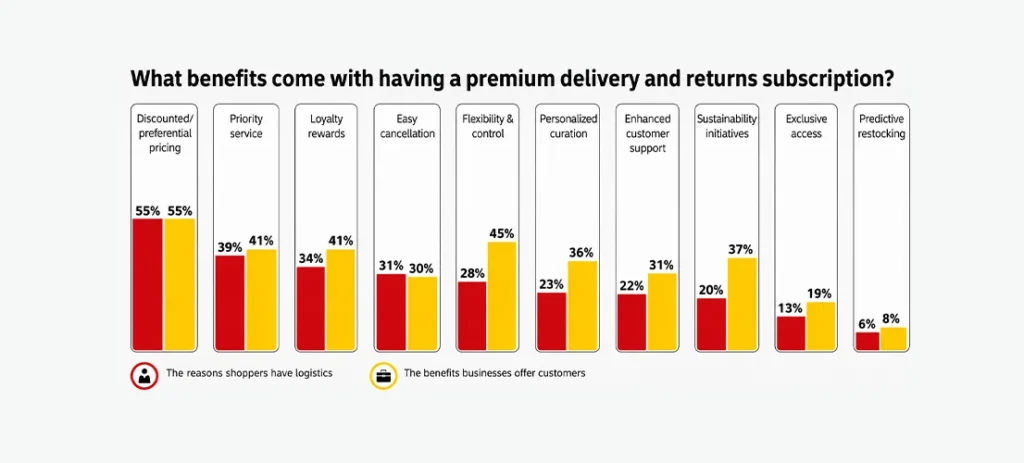
DHL’s research reinforces this distinction. While faster delivery can increase conversion, consumers also want flexibility, transparency and convenient delivery options. 

Comparison of premium e-commerce delivery subscription benefits, including discounted pricing, priority delivery, loyalty rewards, flexible delivery and customer support.

So the competitive battleground is moving from fastest delivery alone toward: 

Speed + Reliability + Choice + Visibility

What This Means for E-commerce Businesses ?

  1. Inventory proximity is becoming a competitive advantage

Companies can only promise shorter delivery windows if inventory is positioned close enough to customers. Regional distribution centres, urban fulfilment centres and dark stores will therefore become increasingly important. 

  1. Last-mile performance now directly affects customer acquisition and retention

Delivery is increasingly part of the product experience rather than a post-purchase process. Poor fulfilment can undermine the marketing investment used to acquire the customer in the first place, which is why we treat last-mile delivery as a core service rather than an add-on.

  1. Delivery partnerships can accelerate market reach

Costco’s use of multiple delivery platforms demonstrates how retailers can add capacity and geographic reach without building an entirely proprietary last-mile network. 

  1. The UAE is becoming a testing ground for ultra-fast retail models

Amazon Now, established quick-commerce platforms and same-day services from traditional retailers indicate that UAE consumers increasingly have access to very short delivery windows across more categories. 

This raises expectations for other e-commerce businesses operating in the market. 

  1. Fulfilment capability will increasingly determine who can scale

As Gulf e-commerce volumes grow, the competitive advantage will increasingly belong to retailers that can connect: 

accurate forecasting + strategically positioned inventory + efficient warehousing + technology-enabled order processing + reliable last mile.

That is the exact combination Qafila is built around. If delivery speed and fulfilment reliability are becoming your competitive battleground, see how our e-commerce fulfilment services and value-added services are structured — or talk to our team about a fulfilment model built around your delivery promise.

You May Also Like

Monthly Market Update – Delivery Speed and Fulfilment Become Competitive Differentiators

Monthly Market Update – Delivery Speed and Fulfilment Become Competitive Differentiators

Monthly Market Update – Delivery Speed and Fulfilment Become Competitive Differentiators E-commerce competition is increasingly moving beyond price, product assortment and digital experience. Delivery speed, fulfilment reliability and inventory proximity are becoming central parts of the customer proposition.  Global consumer expectations continue to rise. DHL’s 2026 global e-commerce research, covering 29,000 shoppers and 5,800 businesses […]
Monthly Market Update – AI Is Reshaping Global Commerce and Creating New Opportunities in the Middle East

Monthly Market Update – AI Is Reshaping Global Commerce and Creating New Opportunities in the Middle East

Monthly Market Update – AI Is Reshaping Global Commerce and Creating New Opportunities in the Middle East The ecommerce industry has always been shaped by changes in how consumers discover products. First, search engines became the gateway to online shopping. Then marketplaces such as Amazon transformed product discovery by bringing search, reviews and purchasing into one platform. More recently, […]

Monthly Market Update | Ecommerce Trend – Livestream Marketing

Monthly Market Update | Ecommerce Trend – Livestream Marketing

Monthly Market Update | Ecommerce Trend – Livestream Marketing Livestream marketing is emerging as a distinct ecommerce channel that combines live video, product demonstrations, audience interaction and a direct path to purchase. During a livestream, shoppers can see products in use, ask questions, receive recommendations and respond to limited-time offers.  The format reduces the distance between product discovery and conversion. Instead of moving […]

Monthly Market Update: The State and Evolution of Quick Commerce & 30–60 Minute Delivery in UAE & MENA

Monthly Market Update: The State and Evolution of Quick Commerce & 30–60 Minute Delivery in UAE & MENA

Monthly Market Update: The State and Evolution of Quick Commerce & 30–60 Minute Delivery in UAE & MENA Quick commerce is becoming one of the fastest-shaping segments of retail in the UAE and wider MENA region. What started as grocery delivery within a few hours has evolved into a highly competitive “instant delivery” ecosystem where 10 […]

Middle East Online Marketplaces Market Update- June 2026

Middle East Online Marketplaces Market Update- June 2026

Scaling Peak-Season Fulfillment for a Consumer Electronics Retailer The ecommerce market across the Middle East is growing strongly in so far in 2026, supported by rising internet access, smartphone adoption, faster logistics, and expanding digital payments systems. Overall sales continue to rise year over year, driven by consumers buying more online across categories like electronics, fashion, beauty, and […]

Market Update: Ecommerce Packaging Becomes a Growth, Fulfilment and Compliance Priority 

Market Update: Ecommerce Packaging Becomes a Growth, Fulfilment and Compliance Priority 

From Warehouse to Living Room: Qafila’s White-Glove Packaging and Delivery For Consumer Electronics Brand Ecommerce packaging is no longer just a box, pouch or protective wrap. It has become a key part of how retailers manage cost, protect products, meet sustainability expectations, improve fulfilment efficiency, and influence customer loyalty.  As ecommerce continues to grow globally, packaging is being pushed […]