

Qafila Ecommece Fulfilment Log
Talk to an agent

The Big Picture: AI is Reshaping E-Commerce Everywhere 

Introduction

AI is no longer a fringe add-on for digital retail. It’s becoming deeply embedded across the whole online shopping journey — from how customers search and browse, to how retailers manage inventory and run ads. The shift isn’t just incremental but structural. 

  • The concept of “agentic commerce” — where AI agents act on behalf of consumers: browsing, comparing, and purchasing — is gaining steam worldwide.  
  • Large global platforms are racing to build the infrastructure that will power this shift: better recommendation engines, AI-powered advertising, and automated logistics.  
  • This isn’t just about convenience. For sellers and retailers, AI tools are driving efficiency gains in operations, smarter decision-making, and potentially higher margins.  

In summary: The future of e-commerce looks more automated, personalized, and intelligent.

Global Trends: What AI Enables in E-Commerce

Smarter, faster shopping thanks to AI agents

Major retailers and marketplaces are embedding AI agents that help users with everything from discovering products to checking out.  

These agents can reduce friction: no more endless search, complicated menus, or manual filters. Instead, shoppers can have a near-instant, conversational experience. 

AI-powered advertising & marketing

Platforms are equipping brands with AI to automate creative production (ads, images, videos), media planning, and campaign optimization.  

This means brands — large and small — can run more targeted, efficient, and faster ad campaigns. That’s a big shift from manual media buys or generic banner ads. 

Optimized supply chains, inventory, and operations

Behind the scenes, AI is optimizing forecasting, inventory management, store-location planning, and supply-chain logistics.  

For retailers, this reduces stockouts or overstock risk, lowers waste (especially in perishable goods), and keeps costs down while maintaining responsiveness.

Personalized customer experiences at scale

Using data on browsing history, purchase patterns, and behavior, AI enables dynamic personalization: tailored recommendations, customized offers, and smarter cross-selling.  

Also, more advanced chatbots and virtual shopping assistants are being deployed to improve customer support and engagement. 

In areas with sufficient wind resources, wind turbines can provide sustainable energy. Combining renewable sources with energy storage solutions, like batteries, further ensures uninterrupted power supply during low production periods. 

MENA / UAE Snapshot: Rapid Adoption, Unique Dynamics

The MENA region — including the UAE — is embracing AI in retail/e-commerce with particular enthusiasm. 

  • In MENA, 53% of shoppers report they’ve already used AI-powered visual search tools when shopping online.  
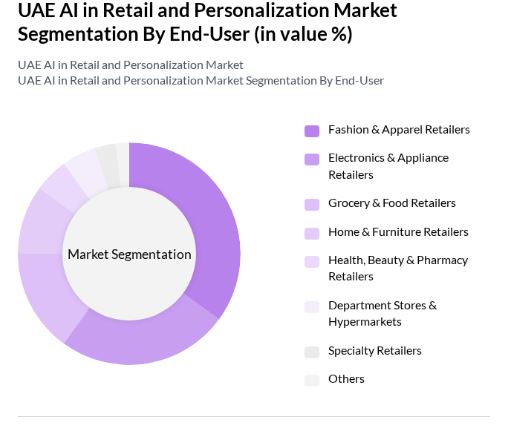
  • For many retailers in the UAE, AI is now a top investment priority in 2025. The local AI-in-retail market was estimated around USD 338 million in 2024, with forecasts placing it at roughly USD 1.3 billion by 2030.  
  • The region’s unique retail culture — high smartphone penetration, strong appetite for both luxury and convenience, growing e-commerce adoption — makes AI not a luxury, but a necessity for competitiveness. 

     
    Key areas where AI is making real impact in the UAE / MENA region: 

  • Personalized Shopping & Recommendations: Retailers now offer recommendation engines and contextual shopping experiences that match local consumer behavior.  
  • Operational Efficiency & Inventory Optimization: AI helps predict demand, manage stock, and anticipate logistical needs in a region where supply-chain dynamics and demand patterns can change fast.  
  • Enhanced Customer Support & Virtual Assistance: Chatbots and conversational AI are improving customer engagement and after-sales support.  


In summary, in the UAE / MENA region, AI is enabling retailers to meet rising consumer expectations — from convenience and speed to personalization and reliability.
 

Why This Matters for 2025–2028

  • Retailers can no longer treat AI as optional: In mature markets and increasingly in MENA, AI-powered shopping features are becoming the baseline. Retailers that don’t adapt risk falling behind. 
  • New business models are emerging: As AI agents and autonomous tools take over repetitive tasks — from product discovery to ad creation to logistics — competitive advantage will come from how well businesses integrate AI into their core workflows. 
  • Consumer behavior is shifting: Shoppers increasingly expect smarter, faster, more personalized experiences. In MENA especially, high mobile penetration and youthful demographics accelerate that shift. 
  • Efficiency and scalability: For retailers aiming to grow across geographies or verticals (e.g. grocery, luxury, fashion), AI makes it easier to scale operations intelligently without proportionally increasing cost or complexity. 

Potential Challenges & Considerations

  • Localisation matters: What works in global markets may not fit MENA’s diverse languages, cultures, payment preferences, and regulatory environments. AI systems need to be tailored. 
  • Data privacy and security: As AI collects and leverages more customer data (preferences, purchase history, behavior), compliance with data protection standards becomes crucial. 
  • Infrastructure constraints: In some parts of MENA, logistics and fulfilment infrastructure may lag behind the speed AI promises. Without reliable last-mile delivery or payment systems, AI-driven innovations might under-deliver. 
  • Skill and investment gaps: Small retailers may struggle to implement or maintain advanced AI systems. There’s a risk of widening the gap between large, well-resourced players and smaller shops. 

Conclusion

AI is fundamentally transforming e-commerce globally — and the ripples are felt strongly in the UAE and MENA. From smarter inventory and operations behind the scenes to personalized shopping, chatbots, and AI-powered advertising on the front end — retailers are rethinking how they engage customers.

You May Also Like

The Big Picture: AI is Reshaping E-Commerce Everywhere 

The Big Picture: AI is Reshaping E-Commerce Everywhere 

Retail Media Market Update – July, 2025 Introduction AI is no longer a fringe add-on for digital retail. It’s becoming deeply embedded across the whole online shopping journey — from how customers search and browse, to how retailers manage inventory and run ads. The shift isn’t just incremental but structural.  The concept of “agentic commerce” — where AI agents […]

Market Update: Holiday Shopping Trends in the UAE and MENA Region | November 2025

Market Update: Holiday Shopping Trends in the UAE and MENA Region | November 2025

Glossier You- How a Viral Scent Redefined E-Commerce Fulfillment and Supply Chain Agility  Introduction As the holiday shopping season approaches, both globally and within the UAE and MENA region, consumers are gearing up to make their seasonal purchases. This period is crucial for retailers, both online and in-store, as it accounts for a significant portion of annual […]

Luxury Industry Insights – October 2025 Market Update

Luxury Industry Insights – October 2025 Market Update

The Rhode Lip Phone Case: A Study in Virality and Supply Chain Management  Introduction The luxury sector is undergoing a profound recalibration. Once driven primarily by aspiration and heritage, it is now contending with a world where both value-conscious buyers and ultra-wealthy connoisseurs are reshaping the rules of engagement. This month’s developments highlight how the industry […]

Packaging & Sustainable Packaging Trends- Monthly Update September 2025 

Packaging & Sustainable Packaging Trends- Monthly Update September 2025 

The Dubai Chocolate Frenzy-Virality, Supply Chain Struggles, and the Copycat Invasion  Global Market Overview In the past few months, the packaging industry has seen a significant shift, driven by both regulatory pressure and consumer demand. Sustainable packaging has been in the spotlight as companies and industries strive to meet environmental goals and adapt to new […]

Second-Hand Retail Market Update – August, 2025

Second-Hand Retail Market Update – August, 2025

Stanley Cup Supply Chain: Before, During, and After Virality Global Market Overview The global second-hand retail market is experiencing significant growth, driven by increasing consumer demand for sustainable and affordable alternatives to new products. In 2024, the global second-hand goods market was valued at approximately $300 billion and is projected to reach nearly $500 billion […]

Retail Media Market Update – July, 2025

Retail Media Market Update – July, 2025

What Are the Standard Logistics Charges at The Time of Import?  Global Retail Media Landscape Retail media has quickly evolved from a niche advertising option to a key player in digital advertising. As traditional advertising methods lose ground, retailers leverage their first-party data to create highly targeted ad experiences, providing new revenue streams.  Growth of […]