Qafila Ecommece Fulfilment Log
Talk to an agent

Monthly Market Update: The State and Evolution of Quick Commerce & 30–60 Minute Delivery in UAE & MENA

Quick commerce is becoming one of the fastest-shaping segments of retail in the UAE and wider MENA region. What started as grocery delivery within a few hours has evolved into a highly competitive “instant delivery” ecosystem where 10 to 60 minute fulfilment windows are increasingly standard. 

In major urban centres like Dubai and Abu Dhabi, consumer expectations are shifting from convenience to immediacy. This is driven by high smartphone penetration, dense last mile delivery networks, and strong competition between platforms such as Talabat, Noon, Instashop, Careem, and Deliveroo. 

The result is a market where delivery speed is no longer a premium feature. It is becoming the default expectation.

Market Growth Overview

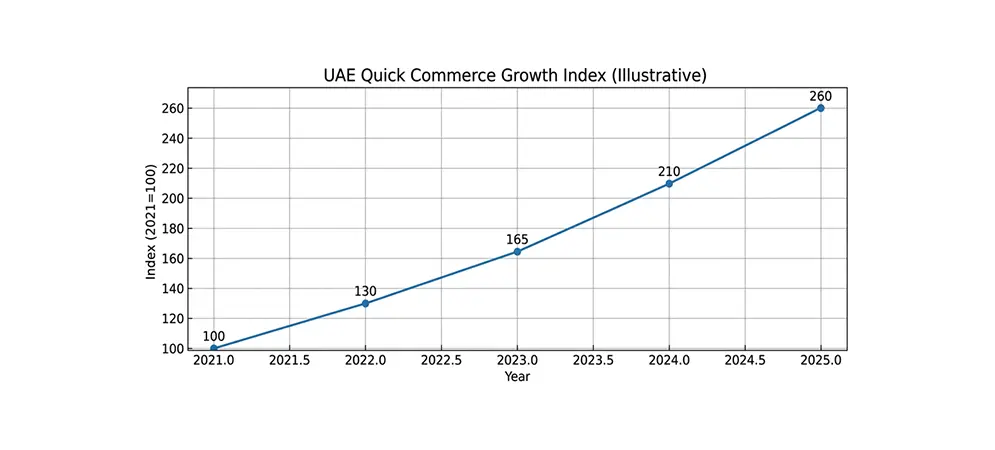
The UAE quick commerce sector has seen rapid expansion over the past four years, supported by investments in dark stores, last-mile logistics, and digital payments. 

The growth trajectory reflects strong demand for instant access to groceries, pharmacy items, and everyday essentials.

Line chart showing illustrative UAE quick commerce growth index rising from 100 in 2021 to 260 in 2025.

The chart shows a steep acceleration from 2021 onward. This reflects: 

1. Post-pandemic normalization of delivery behavior 

2. Expansion of dark store networks in Dubai and Abu Dhabi 

3. Entry of aggressive pricing models from regional platforms 

4. Increased basket frequency per user 

Industry research consistently indicates double-digit growth across GCC quick commerce segments, with grocery delivery leading adoption.

Consumer Behavior and Delivery Expectations

Consumer behavior in UAE urban markets is increasingly defined by “instant gratification retail.” Users are not only ordering more frequently, but also expecting shorter delivery times. 

Three clear delivery expectations dominate the market: 

1. 10–30 minutes for essentials and top-up groceries 

2. 30–60 minutes for broader baskets or mixed orders 

3. Same-day delivery for non-urgent ecommerce purchases 

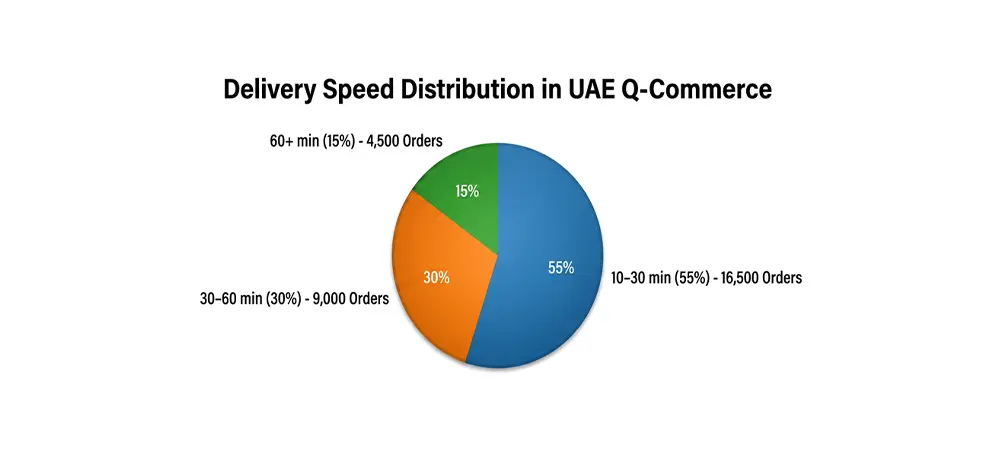
Pie chart showing UAE quick commerce delivery speed distribution, with 55% of orders delivered in 10 to 30 minutes, 30% in 30 to 60 minutes, and 15% taking over 60 minutes.

The dominance of the 10–30 minute segment highlights how quick commerce has moved beyond experimentation into daily usage patterns. 

Key behavioral drivers include: 

1. High density urban living in Dubai and Sharjah 

2. Time-poor consumers with busy work schedules 

3. Strong adoption of digital wallets and frictionless checkout 

4. Habit formation post-COVID lockdown period 

This has effectively created a “micro-shopping” culture where consumers place multiple small orders rather than one large weekly grocery trip. 

Competitive Landscape

The UAE quick commerce ecosystem is highly competitive and increasingly segmented by specialization. 

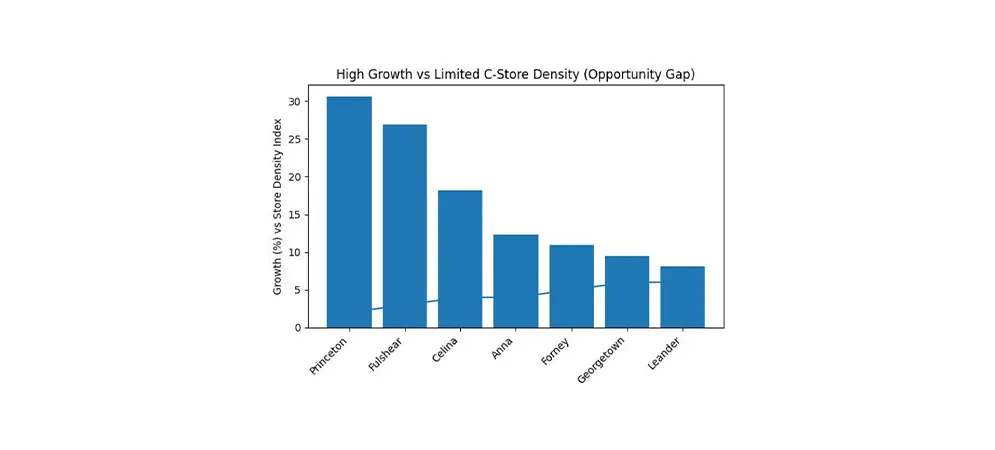
Bar chart showing high growth versus limited convenience store density, highlighting quick commerce opportunity gaps across cities including Princeton, Fulshear, Celina, Anna, Forney, Georgetown, and Leander.

Key players

Talabat 

  • Strongest regional footprint 
  • Integrated grocery, food, and convenience delivery 
  • Benefits from scale and logistics density


Noon Minutes 

  • Aggressive expansion in fast delivery retail 
  • Competes heavily on pricing and speed


Instashop 

  • Early pioneer of UAE grocery delivery 
  • Strong pharmacy and grocery partnerships 
  • Deep local merchant network


Careem 

  • Expanding “Careem Quik” and multi-service ecosystem 
  • Leverages ride-hailing infrastructure for logistics


Deliveroo 

  • Premium positioning in food and essentials 
  • Strong in restaurant-led quick commerce


Competition is increasingly defined by who can maintain profitability while scaling sub-30-minute delivery. 

Infrastructure and Logistics Evolution

Quick commerce growth in UAE is heavily dependent on logistics innovation. with last-mile delivery GCC networks forming the backbone of this shift. Here are three infrastructure shifts are driving the sector. 

1. Dark Store Expansion

Retailers are building micro-fulfilment centres closer to residential zones. This reduces delivery distance and enables sub-30-minute delivery.

2. Algorithmic Dispatch Systems

Platforms are investing in AI-driven routing to reduce delivery inefficiencies and optimize rider allocation in real time. 

3. Gig Economy Delivery Networks

Flexible rider fleets allow platforms to scale quickly during peak hours such as evenings and weekends, while increasingly supporting value added services e-commerce like scheduled slots and subscription perks. 

Together, these improvements have made 30–60 minute delivery windows structurally viable rather than operationally exceptional. 

Regional MENA Expansion

While the UAE is the most mature quick commerce market in the region, Saudi Arabia is rapidly scaling similar models, particularly in Riyadh and Jeddah. Expanding cross-border delivery GCC networks are also helping platforms extend e-commerce delivery solutions GCC beyond their home markets into neighbouring countries. 

Across MENA: 

1. Grocery delivery remains the largest category 

2. Pharmacy delivery is the fastest growing segment 

3. Fashion and electronics fulfilment for quick delivery is still emerging 

However, infrastructure gaps outside major cities still limit full 30-minute delivery penetration.

Key Market Insight

The most important shift in the UAE quick commerce market is not just speed. It is frequency. 

Consumers are increasingly: 

1. Ordering smaller baskets more often 

2. Using delivery apps as daily utility tools 

3. Substituting physical convenience stores with digital alternatives 

This is turning quick commerce into a hybrid between retail and infrastructure.

Conclusion

The UAE and broader MENA quick commerce market is moving from early adoption into maturity. The competition is no longer about who offers delivery, but who can deliver fastest, most reliably, and at the lowest cost per order. 

The 30–60 minute delivery segment is becoming the baseline expectation, while the 10–30 minute category is emerging as the new premium standard. As logistics infrastructure continues to scale, the region is likely to see further consolidation, with a few dominant platforms shaping the future of instant retail.

You May Also Like

Monthly Market Update: The State and Evolution of Quick Commerce & 30–60 Minute Delivery in UAE & MENA

Monthly Market Update: The State and Evolution of Quick Commerce & 30–60 Minute Delivery in UAE & MENA

Monthly Market Update: The State and Evolution of Quick Commerce & 30–60 Minute Delivery in UAE & MENA Quick commerce is becoming one of the fastest-shaping segments of retail in the UAE and wider MENA region. What started as grocery delivery within a few hours has evolved into a highly competitive “instant delivery” ecosystem where 10 […]

Middle East Online Marketplaces Market Update- June 2026

Middle East Online Marketplaces Market Update- June 2026

Scaling Peak-Season Fulfillment for a Consumer Electronics Retailer The ecommerce market across the Middle East is growing strongly in so far in 2026, supported by rising internet access, smartphone adoption, faster logistics, and expanding digital payments systems. Overall sales continue to rise year over year, driven by consumers buying more online across categories like electronics, fashion, beauty, and […]

Market Update: Ecommerce Packaging Becomes a Growth, Fulfilment and Compliance Priority 

Market Update: Ecommerce Packaging Becomes a Growth, Fulfilment and Compliance Priority 

From Warehouse to Living Room: Qafila’s White-Glove Packaging and Delivery For Consumer Electronics Brand Ecommerce packaging is no longer just a box, pouch or protective wrap. It has become a key part of how retailers manage cost, protect products, meet sustainability expectations, improve fulfilment efficiency, and influence customer loyalty.  As ecommerce continues to grow globally, packaging is being pushed […]

Ecommerce Growth Drivers in 2026- Global and UAE Market Update 

Ecommerce Growth Drivers in 2026- Global and UAE Market Update 

Enhancing Last-Mile Delivery for a Smart Home Tech Retailer Introduction Ecommerce continues to reshape how people shop, offering faster, more personal, and more convenient experiences than ever before. In 2026, both global consumer demand and business innovation are powering higher online sales across categories, from fashion to electronics. Technology, changing consumer habits, and smarter logistics remain key forces […]

ECommerce Packaging Trends and Insights 2026: Monthly Market Update

ECommerce Packaging Trends and Insights 2026: Monthly Market Update

Zero Backlogs, Faster Deliveries: Qafila’s Peak-Season Fulfillment Success Story for an Electronics Brand Introduction In 2026, eCommerce packaging is being pulled in three directions at once: cost pressure from shipping and returns, rising sustainability expectations, and the need to stand out in a crowded digital shelf. Across markets, the “winning” packaging playbook looks less like […]

Just-In-Time Fulfillment Excellence for a Consumer Electronics Retailer

Just-In-Time Fulfillment Excellence for a Consumer Electronics Retailer

Seamless Fulfillment for Rapid Growth: A GCC Beauty Brand’s Success Story with Qafila Introduction Rapid growth across Amazon and multiple online marketplaces pushed a consumer electronics retailer to rethink its fulfillment operations. Faced with rapidly evolving product lines and volatile order volumes, the retailer leveraged Qafila’s advanced logistics network and technology-driven solutions to optimize inventory management, streamline order processing, and […]